Welcome to our website !

Petpujo and Adda

on food, people and places

Badam Kala Kand (Cashew Nut Kala Kand)- Bengali Version


Kala Kand is a pan Indian sweet with various versions depending on the state you are eating it. Largely, it is made with milk, cottage cheese, sugar and is usually decorated with Pistachio nuts. Many also make the sweet using milk solid instead of milk. Some use coconut, carrots etc with the milk to give a different flavor to the taste.

I made the Badam Kala Kand on 17th Feb 2013 for Saraswati Puja celebrated by ‘Adda’ of Slough. The version I am making came about due to shortage of milk while making the sweet for 20 of our friends. So what did I do? I decided to add some broken cashew nuts to increase the quantity with the original recipe. And that how the birth of ‘my’ Badam Kala Kand

Ingredients:

2-Litre full fat milk for chana/paneer/cottage cheese

½ -cups sugar (or even less)

2-litre Milk (or a can of evaporated milk. If using evaporated milk, then do not or use very less sugar)

2-Lemon (juice taken)

1-cup cashew nut broken using a blender

Sliced Pistachio to decorate (use, as much or little you want)

 Method:

1.     Boil 2 litre the milk in a pan and heat well until boiling point

2.     Slowly add lemon juice  to make the chana/paneer/cottage cheese

3.     Drain the chana using a strainer/ Muslin cloth. Wash the chana so that it does not smell of lemon.

4.     Hang the cloth for at least 1hour  so that water drain properly from the chana

5.     Meanwhile in a heavy bottom pan heat the other 2 little milk stirring constantly until it has reduced to half. If using canned evaporated milk, then heat until boiling

6.     Add the broken cashew with the boiled and halved milk or the boiled  evaporated milk (which ever using)

7.     Stir for 5/7 mins

8.     Then add the chana/paneer with the milk and cashew mix and cook until it is almost dry. You will need to stir constantly. it takes time as the flame needs to be on very low heat.

9.     Add sugar and cook until sugar is dissolved

10. Take off the heat

11. Line a tray with parchment paper or rub oil all over the tray and spread the milk and cashew nut mix

12. Sprinkle the Pistachio all over the tray and let it cool

13. Refrigerate  overnight so that kala kand can dry well ( but remain moist )

14. Then cut squares and serve cold or at room temperature

Microwave made Mango-Blackberry Layered steam Sandesh


To me, when I think about ‘food’ like a main dish and its color, mostly I think about yellow, red, green, maroon, white as the normal color for food. Any other colors such as blue, pink, purple etc are colors for cake icing or ice cream rather than main food. Although ice cream and cakes are also main food, yet I would not really think about a purple chicken dish. Would you?
Therefore, when the blogger buzz recipe contest required bloggers to make food needs that are yellow or purple or of butterfly theme, I was really at loss. Making a yellow dish is easy. Most of our dishes are yellow. But purple? Purple only remind me of feminist purple which I like a lot. Nevertheless, I am not very keen on eating purple color food. And I do not eat ice cream of purple or pink color at all. And to be honest I am not fond of purple as individual color.

Hence, to make something purple, without using food color was a struggle. And I wanted to make something that is both purple and yellow. To think of it, it is a great combination; my organisation’s logo is a combination of purple and yellow. However, it also means that I had to think out of box to make something that is easy, tastes wonderful and looks great.

So after much thought I decided to make Mango-Blackberry Layered steam Sandesh (Bengali Sweet). I love mango and it gives a lovely yellow color, blackberry is sweeter than other berries which is good news and it gives a lovely purple color to food ( unlike blueberry) and making steamed Sandesh is as easy as boiling egg. And, I wanted to make something sweet from Bengal so that people get to know our treasured desserts. And it solves the purpose of the yellow-purple combination. Basically, it meets the hunger of the eyes as well of the tummy. Absolute win-win situation!

I am sending this to Blogger’s Buzz and also attending the event on 23rd Feb 2013, UK . To know more about them, click here

Hope you enjoy looking at it and end up making it!

Ingredients: (will make six pieces)

1litre full fat milk

1-lemon/lime, juice

11-blackberry

2-tablespoon mango pulp

2/3-dry mango pieces, cut in to thin slices

6-teaspoon sugar

½-cup sugar to make black berry compote

2-tablespoon of any nuts, cut into small piece

Little bit of oil or butter or ghee


Method:

1.    Boil the milk

2.    Add the lemon juice in the milk so that it curdles

3.    Using muslin, strain the curdled milk and keep it hanging for at least 1 hour so that all water is drained properly. What you will have is called chana in Bengali, paneer in Hindi and nearest English would be cottage cheese

4.    Soak the dry mango into very little milk. Keep aside

5.     Meanwhile heat a pan, add sugar and blackberry, and cook until blackberry and sugar have melted. It would look like blackberry jam

6.    Now take a strainer and strain the blackberry seeds so that you are left with just the sugary juice. This is almost blackberry compote

7.    Now take the Chana and divide in to half

8.    Take half of the chana, place it in blender, add sugar, blackberry compote, and mix it well. You can your hand to do the mixing too. Then you will have to mix until sugar has melted. Keep aside

9.    Wash the blender

10. Now take other half of the chana, add sugar, mango pulp, and dry mangoes (not the milk) and mix well either using hand or mixture. keep aside

11.  In case you are not getting the desired yellow or the purple please use few drops of natural food color to the respective halves

12. Now take a microwave proof square dish and oil/ butter it

13. First of all, make the first layer by spreading the blackberry chana mix all over the dish. it would be around 1cm in height

14. Sprinkle the nuts on the layer

15. Now make the second layer by spreading the mango chana mix over the nuts layer

16. Press a little with hands

17. Fill another big microwave proof bowl with little water and place the square box. Keep a eye so that water is not too much

18.  Steam in full microwave powder for 3 to 4 mins

19. Take it out and let it cool

20.Turn in over a plate and cut into square shapes

21. Serve either cool or at room temperature along with fresh fruit or on their own

For regular update from my blog, please visit my face book page pet pujo and adda and click ‘like’. Also, follow me at my blog. I am featured at Networkedblogs.  You can also leave your comments here. Your comments and suggestions are most welcome. Hope to see you again!
 

Bhapa Misti Doi (Steamed Sweet Yogurt)


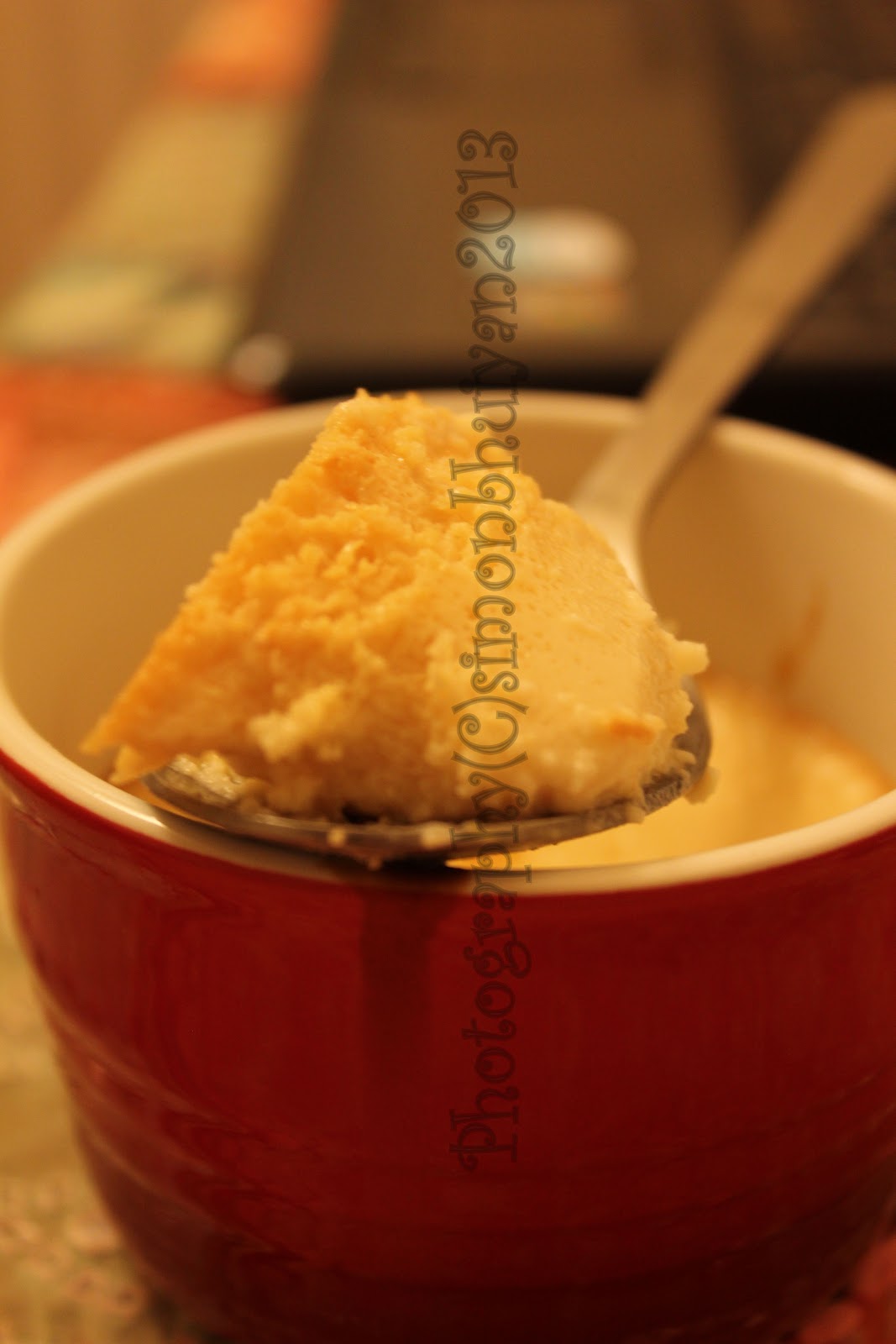
Want to have something sweet but have very little time, too tired to make, suddenly guest coming for dinner so need a quick dessert…. Then this is what you want to make………..Bhapa Misti Doi ( steamed Sweet Yogurt).

This is simple.. really really simple!!!!!!!!!!! Try is to know it!

Happy Cooking!


Ingredients:

1 –cup fat free Greek yogurt/ or full fat yogurt (no need to use hung curd)

1-cup evaporated milk

1-cup condensed milk (if like little less sweet, add less of condensed milk)

 
Method:

1.     Pre heat the oven at 180c( fan oven)

2.    Mix all ingredients together

3.    Pour in ramekins

4.    Fill a baking tray with water and place the ramekins

5.    Bake without covering

6.    After 30/35 mins the yogurt should set, if not keep until set. Insert a skewer to see if the yogurt is set and the top is light brown. it might be little wobbly though. ( your time may vary depending on the quantity and the oven as well)
 

7.    Set in the fridge for 2 hours before serving so that it is not wobbly any more

8.    Garnish it with saffron or fruits like Mango and serve. You can serve it plain without any garnish too and it taste awesome! Enjoy the creaminess of the misti doi

 
For regular update from my blog, please visit my face book page here  and click ‘like’. Also, follow me at my blog. I am featured at Network bloggers.  You can also leave your comments here. Your comments and suggestions are most welcome. Hope to see you again!

Poush Sankranti: time for new harvest, kites, Ganga Sagar Snan and Mela, pitha, puli, payesh

English months January–February, that is the months of Poush-Magh-Falgun in Bengali calendar, are the months for celebration of new harvest.  Ours being predominantly an agrarian society, harvesting festival is celebrated across Indian. Known by different names in different parts of the coiuntry- Poush Sankranti in Bengal, Makar Sankranti in Rajasthan, Andhra Pradesh, Bihar, Jharkhand, Goa, Madhya Pradesh, Karnataka ect, Maghi in Haryana and Himachal Pradesh, Lohri in Punjab, Pongal in Tamil Nadu, Uttarayan in Gujarat and Rajasthan, Magh Bihu or Bhogali Bihu in Assam- with some regional variation, it is celebrated with much fan fare  in all most every household.  It is also celebrated in Nepal –Maghe Sankranti, Myanmar-Thingyan, Cambodia-Maha Sangkran, Thailand-Songkran- again mainly agrarian economy.
 
Although the festival has a religious tonality, in the rural areas, where people still depends on agriculture, everybody celebrates the harvesting festival and takes the opportunity to pray to their God: the land and the crop. In West Bengal this day is also marked by Ganga Snan: a dip in the ocean where Ganges drains in to the sea is considered to be of great religious significance. It is believed that taking holi dip  during this time of the year cleanses all sins. In other part of the country, the sky will be like a rainbow with kites flying from every rooftop. In Delhi, I remember we used to have bonfire and dance around it while throwing peanuts, popcorn etc into the fire.  
Although the festival is a more rural festival, urban household celebrates it too with special emphasis beings food. Hence, it is also known as Pithey Parbon. Both my parents’ household, being agrarian celebrates it in a big way. Although, they have not been farming for ages now, it remains one of the most important festivals along with Noboborsho (Bengali New Year), Lakshmi Puja, Boter Bhat. I do not remember any pujo’s or praying associated with the festival, however my grandmothers, my mother, and all my mashi’s would make pitha and serve it to their God during evening prayers. I like the idea that we are celebrating harvesting festival. With time, we are forgetting our farmers, that our country is essentially an agriculture-based economy, that we have horrible agriculture policies and that every year we have farmers committing suicide. When we are so busy with our life, maybe a festival likes this with all focus on the food and pitha and payesh, we would at least think about the people who are making it all happen.

I am celebrating the day with the hope that I will be able remember my original background that is rooted in the land. I have made Pati Shapta, Malpua, Dudh Puli and Bhapa Pitha for the day. My father is super excited about it. He thinks although it is more about eating now, it still has the power to push people to think about farmers. I believe him.

Here are the recipes for the Pithas that I made:

For Recipe of Pati Sapta Pitha click here

For Recipe of Dudh Puli click here
 

For Recipe of Malpua click here
 
 
For Recipe of Bhapa Pitha Click here


Poush Parbon er Pati shapta: Both sweet and Savory Pati Shapta Pitha for Poush Sankranti

Coconut and Jaggery filled Pati Shapta

Ingredients for Jaggery and coconut filling

1-cup Grated coconut

Jaggery as per taste (you can use sugar too incase you don’t have jaggery) 

 Ingredients for milk fudge filling

4-litre full cream milk

4/5 Cardamom

Sugar

Milk Fudge Filled Pati Shapta
 Ingredients for vegetable filling (for people who cannot take sweet)

6-potatoes thinly sliced

2-onions thinly sliced

Pinch of turmeric

1-green chili

Salt to taste

 Ingredients for Pati Shapta  

1-cup Rice Flour/flour (I used flour)

4/5 cardamom, crushed

Water or milk to mix (I used water)

Jaggery

1- Tablespoon of Semolina (optional. Does not matter much if you do not give. I did not use today as I did not have it at home)

 
Method:

Jaggery and Coconut Filling

1.    Heat a pan and add jaggery

2.   When the jaggery is liquid add the grated coconut  and combine well

3.   Cook until sticky and dry but moist enough to work with the mixture
The jaggery and Coconut Filling

Milk Fudge Filling

1.    Reduce milk on low heat

2.   Add cardamom

3.   Reduce it until milk have turned thick and dry

4.   Add sugar or jaggery and cook little more

5.   Dry it until you can work with hands and use as filling in a crepe

Vegetable filling

1.    Heat oil

2.   Fry onion and potatoes

3.   Add salt, chili and turmeric

4.   Fry until cooked

You can used any vegetable filling, even chicken filling

For Pati Shapta or Crepe

1.    Mix cardamom with flour

2.   Add jaggery or sugar

3.   Add Semolina ( if using)

4.   Add water or milk ( I used water) to make a paste

5.   The batter would be little more liquid than pancake batter
Pati Shapta Batter

6.   Smear oil on a hot frying pan. I used one end of a green papaya to smear the oil on the pan
Smearing oil on the pan with the help of vegetable end

7.    Take a deep spoon of batter and pour it over the pan

8.   Make a round using the back of a spoon , this should be evenly distributed

9.   Put the stuffing length wise at one end ( leaving little space to fold) of the Pati Shapta

10.                Fold the pati Shapta from the end where you have placed the filling and roll it till the other end
Savory Pati Shapta for people to do not take sweet or sugar

11. Serve hot or cold

Lot of people pours thick milk over the pati Shapta. I do not like to eat that way. In fact as per my mother bangal’s do not eat that way. Whatever, I do not like to add more milk over it as it is already really sweet. However, you can pour thick milk or condensed milk over pati Shapta before serving.

For regular update from my blog, please visit my face book page Pet Pujo and Adda  and click ‘like’. Also, follow me at my blog. I am featured at Network bloggers.  You can also leave your comments here. Your comments and suggestions are most welcome. Hope to see you again!


Popular Posts